
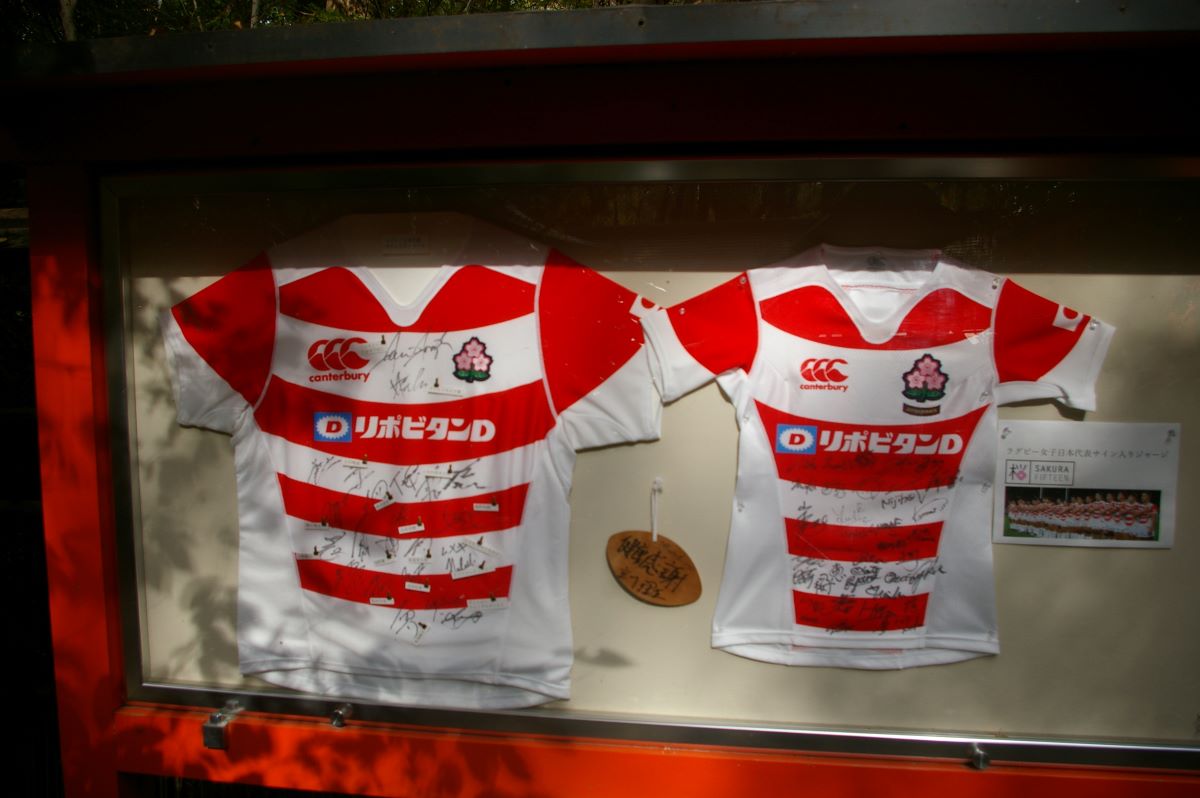
Yokohama's claim to the title of "Birthplace of Rugby in Japan" is legitimate, not just based on Edward Bramwell Clarke's efforts. The game was commonly referred to as "football" prior to the establishment of the Rugby Union in 1871. Exhaustive research by sports historian Mike Galbraith, that has been accepted by the World Rugby Museum in Twickenham, London, proves that the game was played by foreigners in Yokohama as early as 1866.
Last of two parts
Read part 1: Guardian Gods of Rugby, the Game an Englishman Introduced
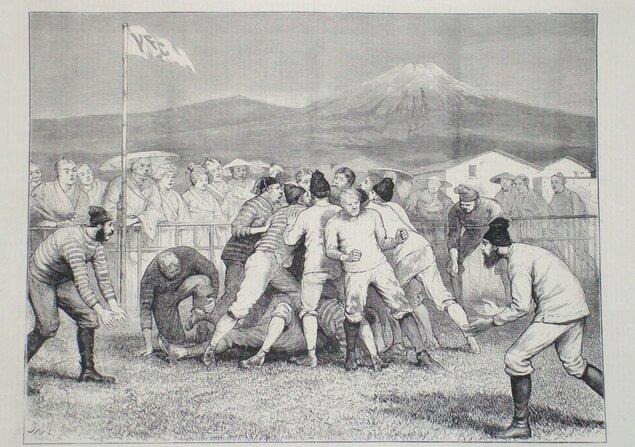
A well-known graphic provides evidence that "ruggers" were getting their kicks in Japan long before the arrival of Clarke. It shows such a match involving what appear to be visiting British sailors, with bemused Japanese spectators looking on. The image appeared in 1874 in both British and American periodicals.
The treaty port of Yokohama opened in 1859. It soon developed a sizable community of foreign residents who enjoyed extraterritorial privileges. However, life was not for those with weak hearts since xenophobic samurai determined to "expel the barbarians" were out and about, ready to test their katana on the unwary foreigner.
The most sensational and dangerous of these affairs was the notorious Namamugi Incident of 1863. It eventually led to the British Navy's bombardment of the city of Kagoshima.
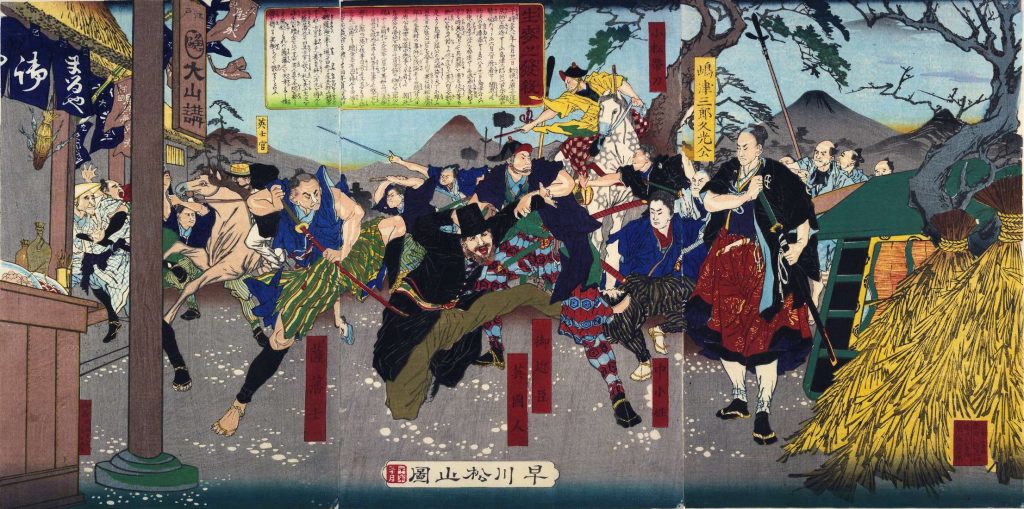
The Namamugi Incident
What happened was that a group of four British citizens were out for a ride in the countryside, including the visiting Shanghai merchant Charles Lennox Richardson, when they encountered the retinue of the father of the lord (daimyo) of the powerful Satsuma fief. Satsuma was a hotbed of anti-Shogunate and anti-foreigner sentiment. It led to a fateful run-in in the vicinity of Namamugi Village in what is today part of the city of Kawasaki.
None of the four "barbarians" dismounted to show deference towards the high-ranking Japanese as ordered — something foreigners were loath to do. Furthermore, Richardson had acquired a reputation for being arrogant and impetuous while in China. In keeping with his reputation, he advanced directly down the narrow highway toward the center of the samurai procession.
He was cut down from his mount and repeatedly slashed and stabbed with swords and lances. Richardson, who had just retired and was on his way home to England, is buried in the Foreigners' Cemetery (Gaijin Bochi) in Yokohama.
The Fiery Aftermath
One of the results of the uproar was that roughly 1,500 British troops were stationed on the Bluff in Yokohama to protect the foreign community. However, at least judging from the journal of the British diplomat Ernest Satow, the arrival of the British soldiers might have been a mixed blessing.
When a huge conflagration broke out in the Miyozaki-cho red light district in November 1866, the volunteer fire department was making a valiant, if futile, effort to control the blaze. British troops were then brought down ostensibly to lend a hand. But according to Satow, some of the redcoats behaved disgracefully. They had managed to get a hold of liquor and stood by drinking and jeering at the civilians fighting the fire.
In the end, one-quarter of the foreign settlement and one-third of the neighboring Japanese town were reduced to ashes. Many people died.
Several of the British officers were Rugby School alumni and appear to have been well-versed in "football." As Sir Winston Churchill reportedly once quipped, rugby is a "hooligan's game played by gentlemen."
No doubt those early rugby games were rough-and-tumble affairs that Clarke had heard about or even witnessed as a boy.
Sparking University Rivalries
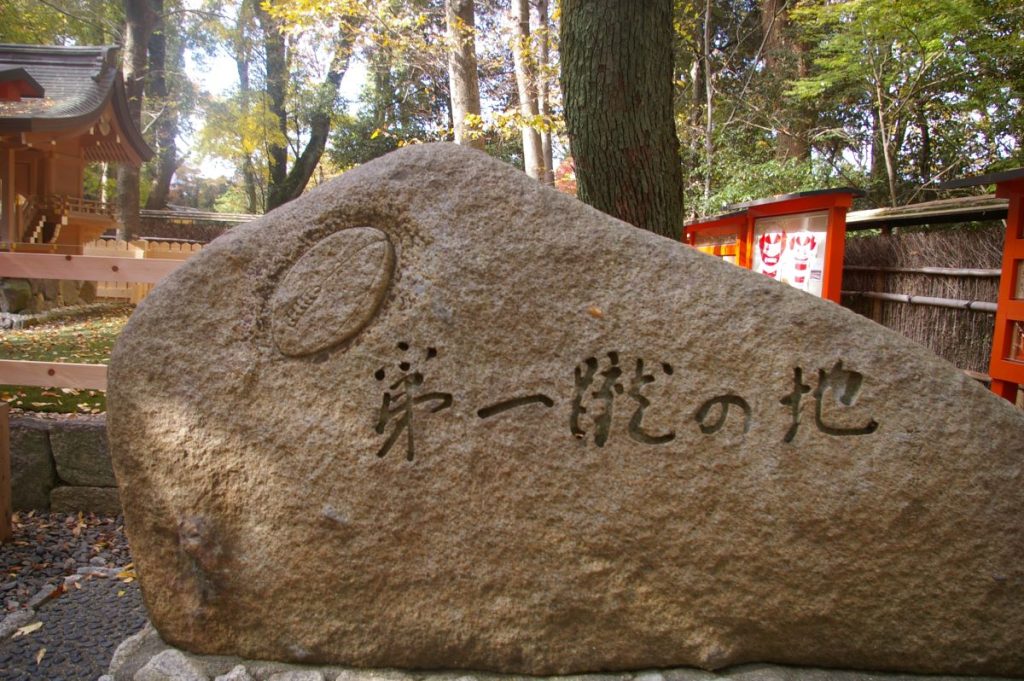
It did not take long after that initial game at Shimogamo Jinja for rugby to spread to other Japanese universities. Doshisha University in Kyoto and Waseda University in Tokyo played the first official inter-university game in 1923. And the fabled rivalry between Keio and Waseda universities began the following year.
The existence of the Anglo-Japanese Alliance from 1902 to 1923 did much to boost the popularity of rugby and other things British in Japan. Perhaps that is the reason members of Japan's Imperial Family have been enthusiastic supporters of Japanese rugby. That is especially true of the late Prince Chichibu (1902-53), after whom the Tokyo rugby stadium ー Chichibunomiya Ragubījō ー in Aoyama is named.
In 1918, the first Japan Rugby Football Championship was held. Five years later in 1923, the Japan Rugby Football Union ー JRFU, Japan's national governing body for rugby union ー was established. The championship game took place regularly until 1943, when it was suspended by the military-controlled government under Prime Minister Hideki Tojo.
Rugby Survives the War
The military was disdainful of all foreign influences, and the wartime government insisted that rugby be referred to as tokyu ("fighting ball"). Japanese equivalents such as dame for "ball" and yoshi for "strike" also replaced English baseball terms.
Rugby was revived during the Occupation, and Japanese teams were soon taking on foreign visiting teams or even venturing abroad. Since 1987, the Japan national team has regularly qualified for the Rugby World Cup. Although usually much smaller physically than their foreign rivals, Japanese ruggers have compensated for this disadvantage with extraordinary speed, deft teamwork and sheer grit.
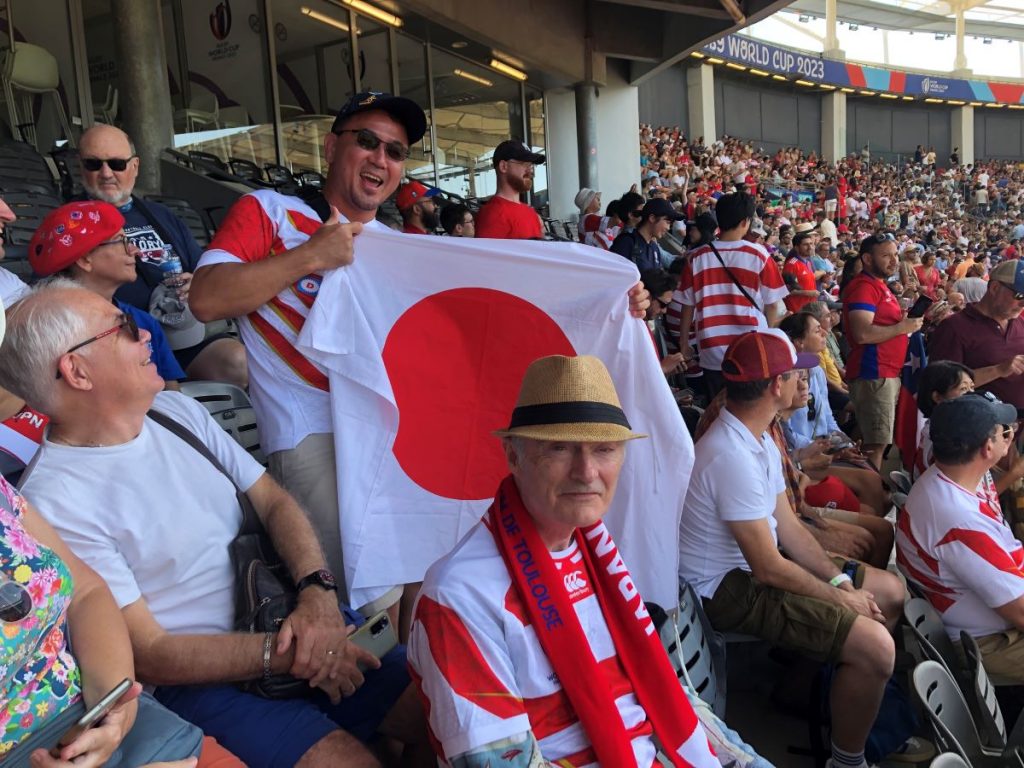
At the 2015 Rugby World Cup the Brave Blossoms, Japan's national team, shocked the sporting world when they upset perennial powerhouse South Africa in what came to be known as the "Brighton Miracle." Japan hosted the 2019 World Cup and the Brave Blossoms did their homeland proud by making it to the quarterfinals for the first time. Appropriately, the final match of the 2019 Rugby World Cup was held at Nissan Stadium in Yokohama.
Growing Support
According to the Wikipedia entry on "Rugby Union in Japan," today there are roughly 125,000 Japanese rugby players and 3,631 official rugby clubs. In addition to university and high school teams, there are also many company-sponsored teams and amateur groups.
I would note that the Kansai area of Western Japan has figured prominently in the history of Japanese rugby. The Hanazono Rugby Stadium in Higashi Osaka is the oldest rugby union stadium dedicated exclusively to the sport. Capable of holding nearly 30,000 spectators, this stadium established in 1929 is the venue for the annual National High School Rugby Tournament held in late December every year.
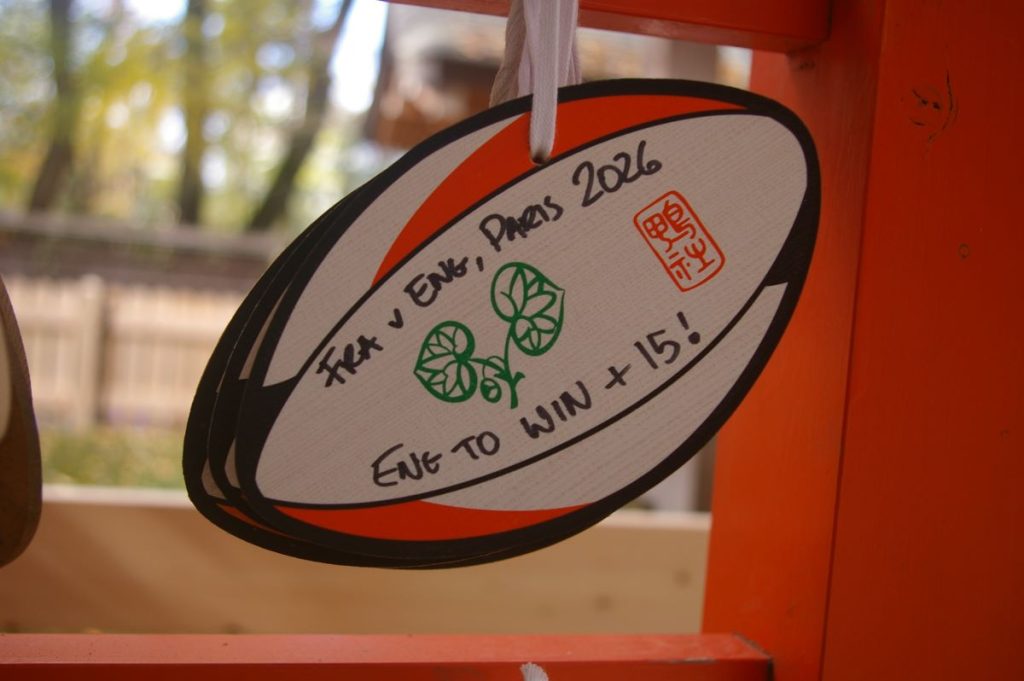
With the ranks of rugby players and supporters fast growing both in Japan and worldwide, Kyoto's "rugby shrine" can expect its steady stream of visitors to continue.
All right, all you flankers and hookers, enforcers and footy blokes. Get ready to ruck and roll at the 2027 Rugby World Cup (October 1-November 13) in Australia.
RELATED:
- Japan Rugby under Eddie Jones: Lessons from Defeat and Looking Forward to the 2027 World Cup
- Tug-of-War Draws Cheers in the Heart of Marunouchi
Author: John Carroll








You must be logged in to post a comment Login